
CASE 44
Future Sessions Inc.
(July 1, 2019 - present)
Your support allows us to continue promoting the concept of co-creation.
Future Sessions Inc. facilitates dialog between people with diverse perspectives, to address increasingly complicated social and organizational issues. Hitoshizuku has been providing PR support since 2019, and began supporting the company's "social relations" in February 2022. These activities differ from traditional PR in that they build long-term relationships with stakeholders, based on an organization's core principles. Future Sessions focuses on co-creation, so we asked how they've been furthering that concept over the last three and a half years.
How social relations differs from traditional PR
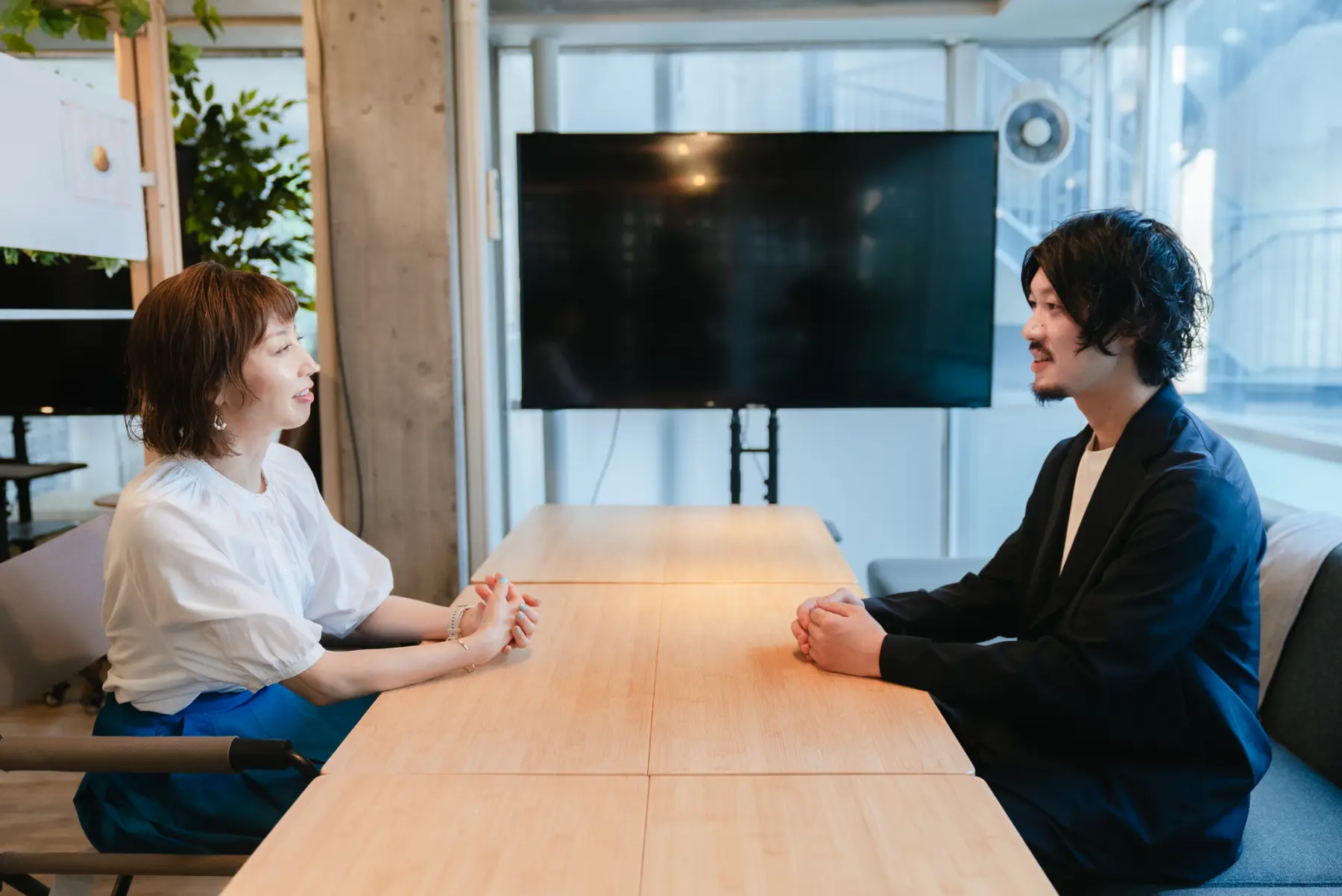
Natsuko Suzuki, Hitoshizuku (Suzuki):
We began supporting Future Sessions in 2019, and formed a business partnership in 2021. We work together on many different projects. In 2022, I helped to set up a new “social relations” team within your company. Can you tell us why you decided to focus on social relations at that time, and how you went about establishing the team?
Yuki Sakamoto, Future Sessions Inc. (Sakamoto):
Back then, the COVID-19 pandemic was causing a lot of uncertainty, and we felt we needed to act. It coincided with the company’s ten-year anniversary, and many felt we should somehow commemorate that. We had many ideas, such as interviewing 100 people, or holding a session with ten people associated with our first decade. But we didn’t know exactly how they would work.
Suzuki:
We began preparing in February, but had only four months until the tenth anniversary in June. It was a tight schedule. In our very first meeting with the website production company, I remember saying how little time we had!
Sakamoto:
At first, Future Sessions conducted almost no PR at all. I had no experience in it, and we didn’t know where to start. Your support was a great help. Rather than promoting Future Sessions as a company, we wanted to promote the concept we hold dear: co-creation. The goal of our social relations was to foster that idea, and increase the number of people taking part. It wasn’t about PR for ourselves.
Suzuki:
It’s a completely different approach. Traditional PR aims to raise awareness and improve your image. But you want to communicate the value of co-creation, and build relationships with like-minded people. We knew that this required a platform for dialog. We couldn’t simply transmit information. For your tenth anniversary, we created a special website. We collected messages from 100 people that have previously collaborated with the company. And we organized conversations between those people and Future Sessions. This involved looking back on collaborative projects, asking what they believe the future holds, and talking about the indicators of a better tomorrow. However, due to COVID-19, most of these interviews were conducted remotely. We lacked visual materials, and struggled to present the content online.
Due to COVID-19, the tenth-anniversary interviews were held remotely, and the visual design was subject to trial and error.
Sakamoto:
We also held an event. It was outdoors, and unfortunately it rained, so our partners—who provided the venue—set up a canopy. We held the event under that cover, around a campfire. It was a very memorable tenth anniversary!
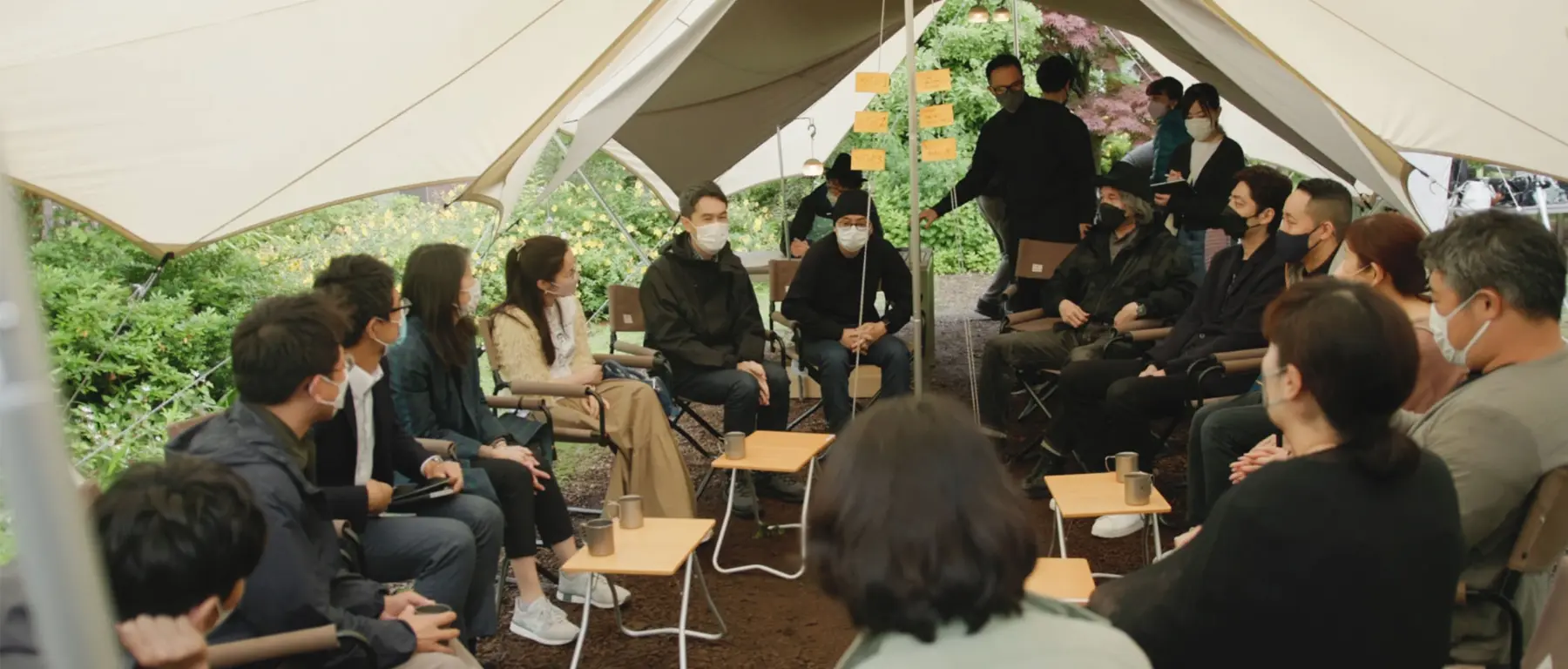
For its tenth anniversary, the company overcame the rain by sheltering beneath a canopy, warming bodies and minds around a campfire.
Suzuki:
Our first social relations activity was a tenth-anniversary event with lots of participants. I think that’s why our subsequent activities went so smoothly.
Sakamoto:
Right. Looking back, I feel that the tenth-anniversary event included all the elements of social relations. Live events, interviews, articles about our projects, press releases, and the involvement of everyone on our staff. It was the prototype for everything we’re doing now.
Demonstrating the value of co-creation—in person
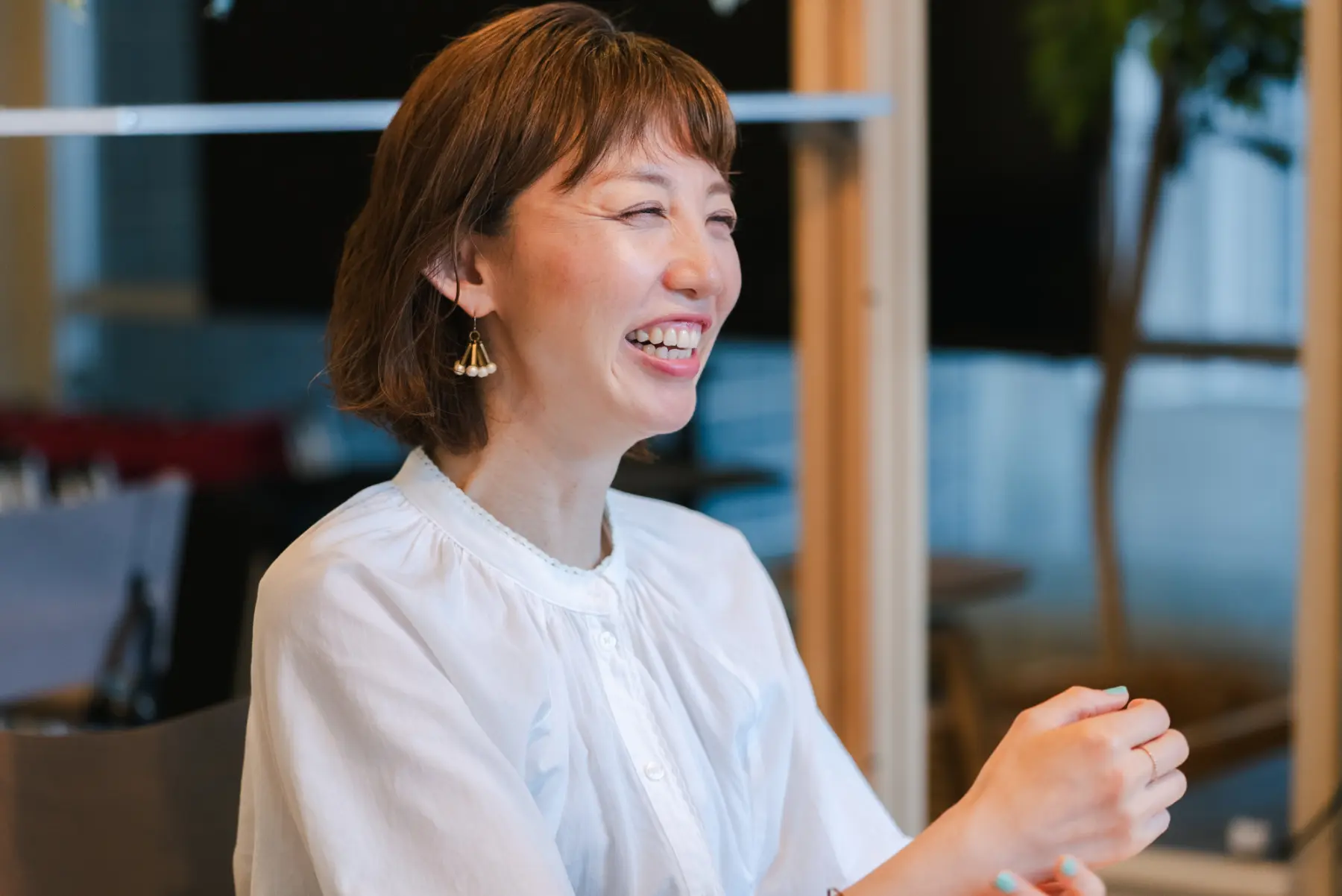
Suzuki:
It was nice that the tenth-anniversary event led to “General Meetings on Co-creation,” an independent project currently organized by Future Sessions.
Sakamoto:
Yes. In addition to our tenth-anniversary event, we wanted to provide a continuous platform for co-creation. So we currently host a General Meeting on Co-creation twice a year. Together with our partners, we discuss the themes we want to explore “now.” The goal of these independent sessions is to take partnerships to the next level. It’s a core element of our social relations.
Suzuki:
Instead of sending out a one-way stream of information, you created an ongoing opportunity for people to actually meet and talk. They can get a sense of your values, and think together about co-creation. Why did you decide to establish this series of events?
Sakamoto:
It’s difficult to communicate, in words, what our “future sessions” are. And there are limited opportunities to participate. COVID-19 reduced the number of sessions held in person, so we felt a need to promote the value of face-to-face communication.
Suzuki:
When I first attended a General Meeting, I felt it was a significant opportunity to communicate the value of Future Sessions. Some participants were positive, saying, “I want more people in my company to experience co-creation.” Others were candid, saying, “I see the need for co-creation, but I don’t see how to apply it to my daily work.” I could see the importance of continuous dialog.
Sharing ideas through systematic communication
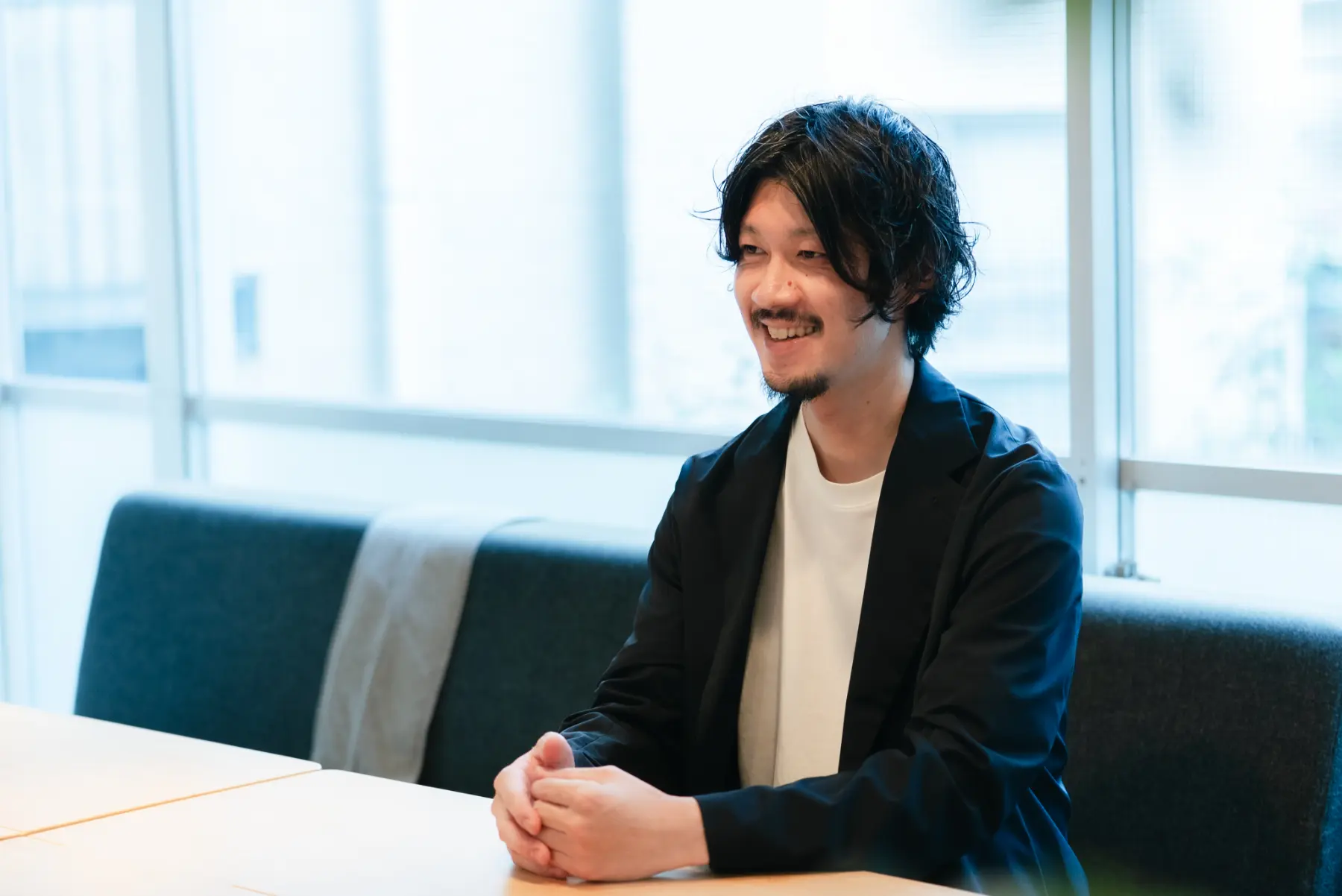
Sakamoto:
The support we’ve received for our social relations has boosted the volume and scope of our PR. Previously, there were around 20 articles on our website about past projects. But by 2025, we doubled that number. We now post on social media every week, send out an email newsletter every month, and use “note.” Some people tell us it was those posts that convinced them to attend a General Meeting, or one of our open sessions. Systemizing our communication has helped us to maintain consistency.
Suzuki:
First, to visualize what you need to communicate, we held company-wide meetings, and consolidated the information into a PR calendar. To reduce the workload of posting on social media, we created set formats, and made it easier to divide up the tasks. We made a system for regular, routine communication.
Sakamoto:
We also asked you to help us revise the structure and tone of our articles about past projects. Previously, they varied widely, because the articles were written by people involved in each project. Previously, they varied widely, because the articles were written by people involved in each project.
Suzuki:
I knew that the articles should describe the value of each project, and the involvement of Future Sessions. But we avoided taking a marketing-oriented approach, and directly describing the benefit of Future Sessions’ contributions. Instead, we focused on the lessons learned from each collaborative project, and the perceived social changes. We created a format that clearly showed the collaborative process, and the improvements it brought about.
Sakamoto:
Over time, more and more staff members have enthusiastically taken part in our social relations activities. We’ve shared what we’re doing in weekly, company-wide meetings. Activities that previously took place within our team are now taking place throughout the company.
Suzuki:
That’s fantastic! At first, you had some issues with internal communication, didn’t you?
Sakamoto:
We did. COVID-19 led to more remote workers. Everyone was concentrating on their own projects, and there was little time for internal communication. We knew we needed to share information and generate dialog within the company, in addition to our external messaging. So we set aside time in company-wide meetings.
At first, we hadn’t conveyed the goal of social relations to our colleagues. Setting aside that time allowed us to hear their opinions and suggestions. We were still searching for the right style of communication. And as our internal discussions continued, I think we arrived at a style that best represents Future Sessions. Sometimes people share frank opinions. They may say that a certain piece of messaging is going in the wrong direction. But I see that as evidence that our colleagues are taking this seriously. So I’m very grateful.
To clarify and communicate our core message, we must shape it slowly and carefully, through repeated internal discussion. Sometimes opinions conflict, and there’s no easy solution. But through trial and error, we’ve reached a style that largely satisfies everyone. I’m very grateful to you for sticking with us, and understanding the need for perseverance.
From one partnership to another: Communication that spreads value
Suzuki:
Thank you for your kind words. But on the other hand, are there any elements of Hitoshizuku’s support that could be improved?
Sakamoto:
Any problems were less to do with Hitoshizuku, and more to do with social relations itself. It’s difficult to measure its effectiveness. How many people did we reach? How many enquiries did we get? Numerical data doesn’t tell the whole story. However, we’ve received feedback from some sources, such as participants of our General Meetings, and recipients of our monthly newsletter.
Suzuki:
In social relations, the quality and depth of your relationships are important indicators. I’d love to be able to visualize them. I think that the ultimate outcome of the General Meetings is the birth of new projects, and continuous dialog between participants.
Sakamoto:
It would be wonderful for co-creation to emerge between people that Future Sessions brought together. General Meetings serve as a gateway. This raises interest, which is sustained through newsletters and social media. And eventually, people start new projects. That’s the cycle we hope to create.
Suzuki:
One company has actually published a book about co-creation, and the idea came from a General Meeting. You established a platform for communication, and it led to concrete action. I was delighted; it shows the true appeal of social relations.
Sakamoto:
Speaking of improvements, I think we still have a lot to learn about PR. We don’t have a firm grip on the knowledge or the theory, which I’m afraid causes a lot of bother for you.
Suzuki:
There are standard ways of doing things, but you don’t always have to follow them. It’s important to adapt established theories to fit the philosophy and values of an individual or organization. At Future Sessions, you value co-creation, and the thought and support that surround it. You prioritize spreading awareness of each project to as many people as possible. That defines your distinctive style of communication. So I don’t think it’s important for you to master the knowledge or theory. I’d rather help you to develop your own! So don’t hesitate to ask us anything at all.
Sakamoto:
In that case, we’ll keep asking! When planning communication, you consider values and perspectives instead of simply measuring effectiveness in terms of data. Quality over quantity. When opinions emerge from within our company, you listen to each one carefully, and progress at an appropriate pace.
Suzuki:
Finally, what social relations activities would you like to conduct in the future?
Sakamoto:
For the fourth General Meeting, held recently, we teamed up with one of our partners. Participants hearing about Future Sessions for the first time were able to directly experience co-creation. I felt it was a great success, that will lead to new possibilities. I want to follow up on that example by pursuing diverse partnerships, developing new connections, and improving the effectiveness of our social relations. And I hope the people that connect through our sessions will go on to start collaborative projects together.
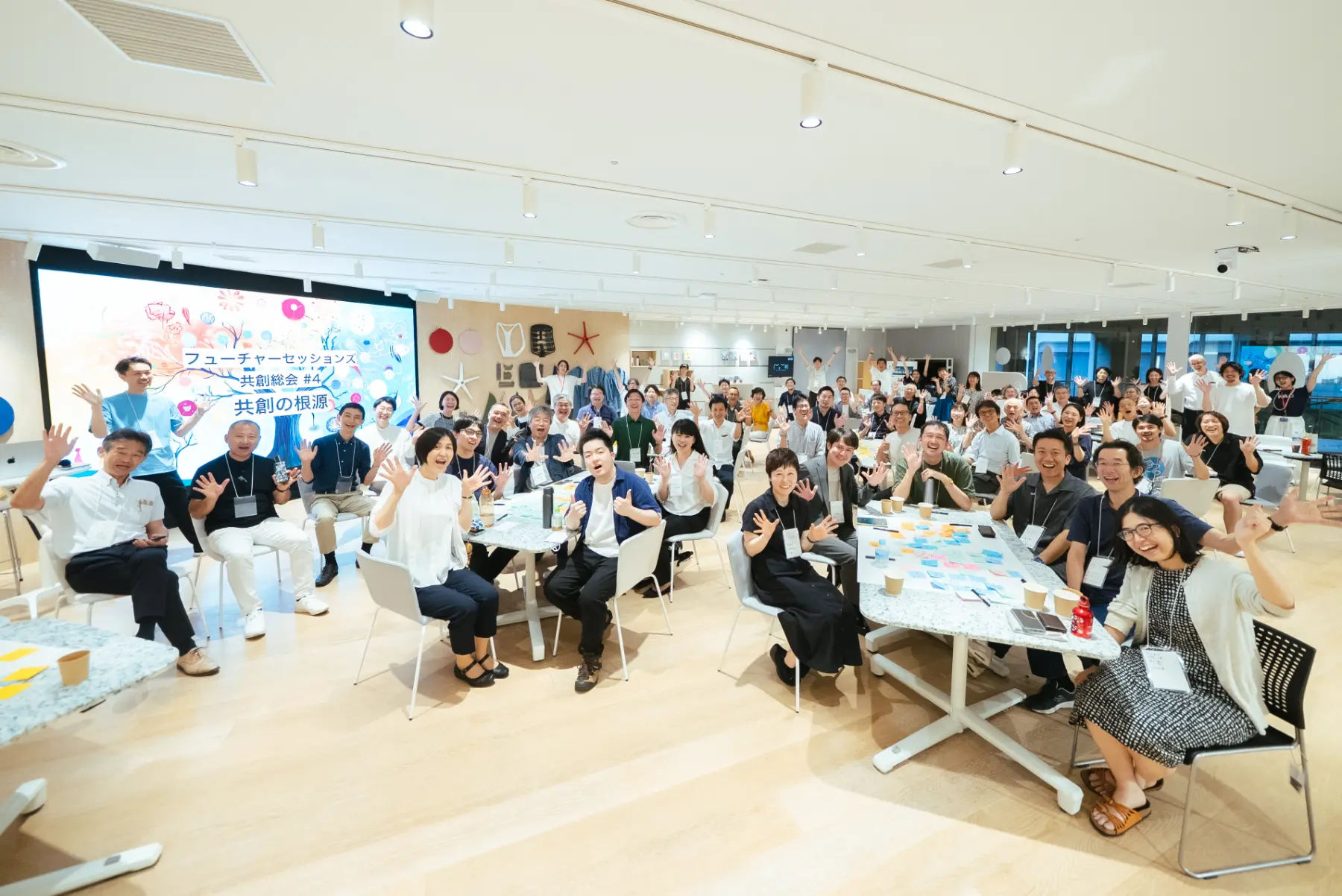
70 people gather for the fourth General Meeting on Co-creation, the first to be held in conjunction with a partner company.
Suzuki:
Absolutely! At the recent General Meeting, I too discovered innovative ideas and values. It was a very refreshing experience. I’m excited at the thought of it leading to new projects!
Sakamoto:
I hope you’ll continue working with us on communication strategies and other topics. Building collaborative projects is a big goal, so we’re counting on your support.
Suzuki:
Of course! You, and the rest of the social relations team, listen carefully to the opinions within your company, which is why you’re so successful. There are challenges, such as measuring that success, but I hope can continue supporting your mission to spread the concept of co-creation throughout society.
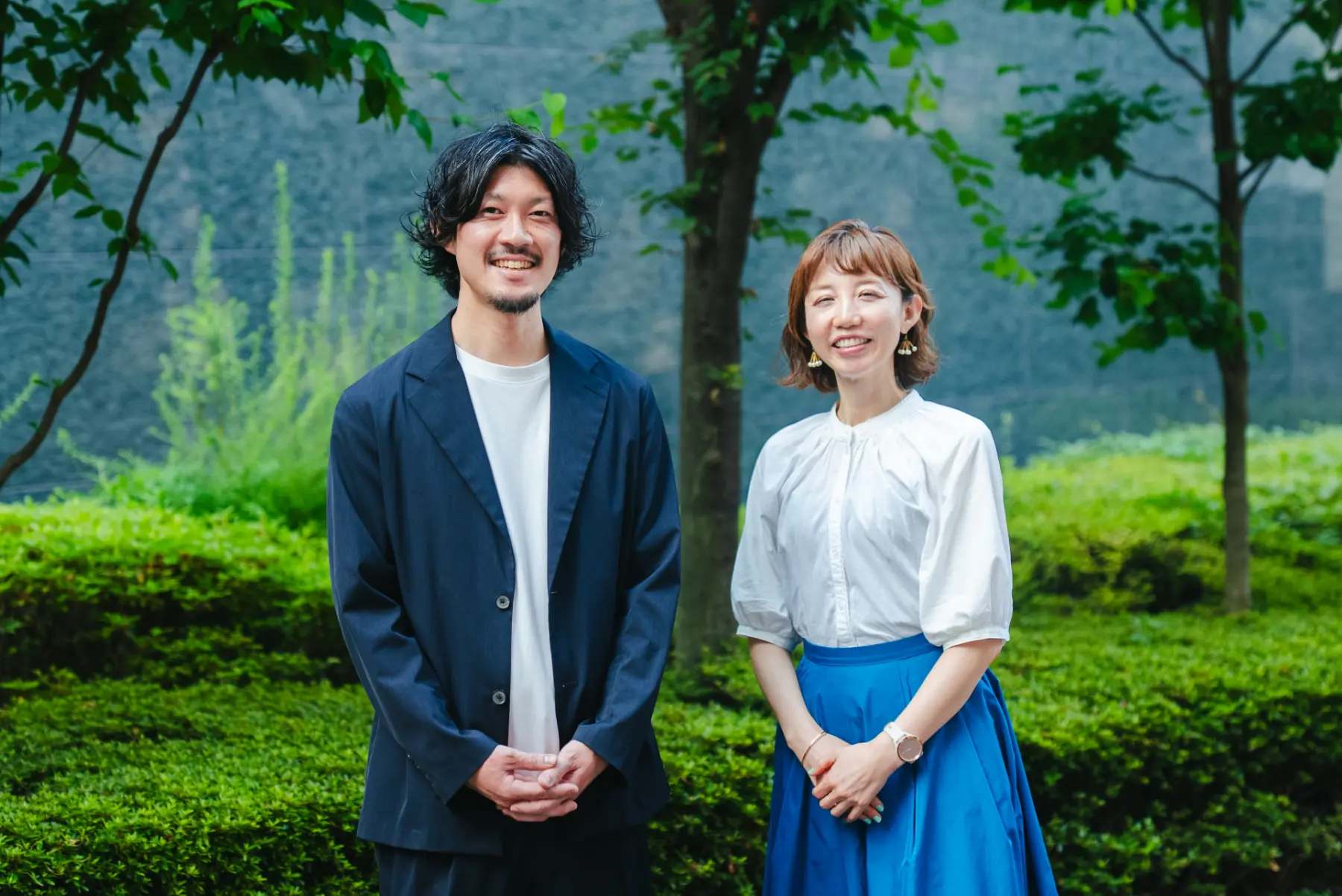
Photography: Hiroyuki Horigome
Editing: Mayuki Tsujihara
Translation Editing: Satomi Furukawa
RECENT WORKS

| Name | Hitoshizuku Inc. |
| Address | 33 Nihonodori Naka-ku Yokohama Kanagawa 231-0021 JAPAN |
| Branch | Hamacho Odawara Kanagawa 250-0004 JAPAN |
| Phone | 81 045 900 8611 |
| info@hitoshizuku.co.jp |
| President | Hiroshi Kokubo |
| Established | March 2016 |
| Capital | 3,000,000yen |
| Business | Advertising & Public Relations Agency Planning & Produciton of Social Good Projects |
| Lawyer | Junna Tei / Yokohama First Law Office |
| Tax Advisor | Satoru Motokoide / Uniques Money Advisory |
| Labor and Social Security Attorney Office Work Innovation | |